Pillar Guide
The blacklegged tick (Ixodes scapularis) is now established across most of Southern Ontario and is the only known vector of Lyme disease in the province. Yard perimeter treatment substantially reduces tick density on residential properties. Here is what the science says and how we treat.
Ontario hosts several tick species, but one matters for human health more than the rest: the blacklegged tick, also called the deer tick (Ixodes scapularis). It is the only confirmed vector of Lyme disease in Ontario, and it has expanded its range dramatically over the past 25 years. Public Health Ontario has documented established populations across virtually all of Southern Ontario, with risk areas extending up the Lake Huron shore, the Lake Ontario watershed, the eastern Ontario corridor, and increasingly into central Ontario.
The American dog tick (Dermacentor variabilis) is the second-most common tick on Ontario humans. It is larger, more conspicuous, more often encountered, and a vector of Rocky Mountain Spotted Fever in other regions, but in Ontario the public health concern is much lower than for the blacklegged tick because RMSF is rare here. Identification matters because the treatment recommendation differs.
The lone star tick (Amblyomma americanum) is increasingly being identified in Southern Ontario as its range expands northward. It is associated with several human pathogens including ehrlichiosis. Its presence is monitored by Public Health Ontario.
The blacklegged tick has a two-year lifecycle with three blood-feeding stages: larva, nymph, adult. Each stage feeds on a single host before molting or laying eggs. Larvae feed in late summer of year one (typically on small mammals and birds), nymphs feed the following spring and summer of year two (on small to medium mammals, including humans), and adults feed in late summer through fall of year two (on larger mammals like deer and humans).
The nymphs are the public health priority. They are tiny (about the size of a poppy seed), most active in May, June, and July, and responsible for most Lyme disease transmission to humans. They are easily missed during tick checks because of their size. Adults are larger and more conspicuous but transmit less Lyme to humans simply because most people notice and remove them faster.
Borrelia burgdorferi (the bacterium that causes Lyme disease) is acquired by ticks when they feed on infected reservoir hosts (mostly small mammals, especially white-footed mice). Once a tick is infected, it remains infected for life and can transmit the bacterium during subsequent feeds. Transmission to humans typically requires the tick to be attached for 24 to 36 hours or longer, which is why prompt removal is the most important post-exposure intervention.
Residential yard treatment for ticks is regulated under the same framework as biting arthropod control. We hold the Mosquito and Biting Flies licence (L-215-7338555928) which authorizes this work. The application targets the lawn-wood interface where ticks rest and quest for hosts.
Blacklegged ticks do not live in maintained lawns. They live in shaded leaf litter, low ground cover, and the transitional zone where mowed lawn meets unmaintained vegetation: the wood edge, the shrub line, the stone wall, the back edge of the property where leaf litter accumulates. Ticks quest by climbing onto a blade of grass or low vegetation and waiting for a host to brush past.
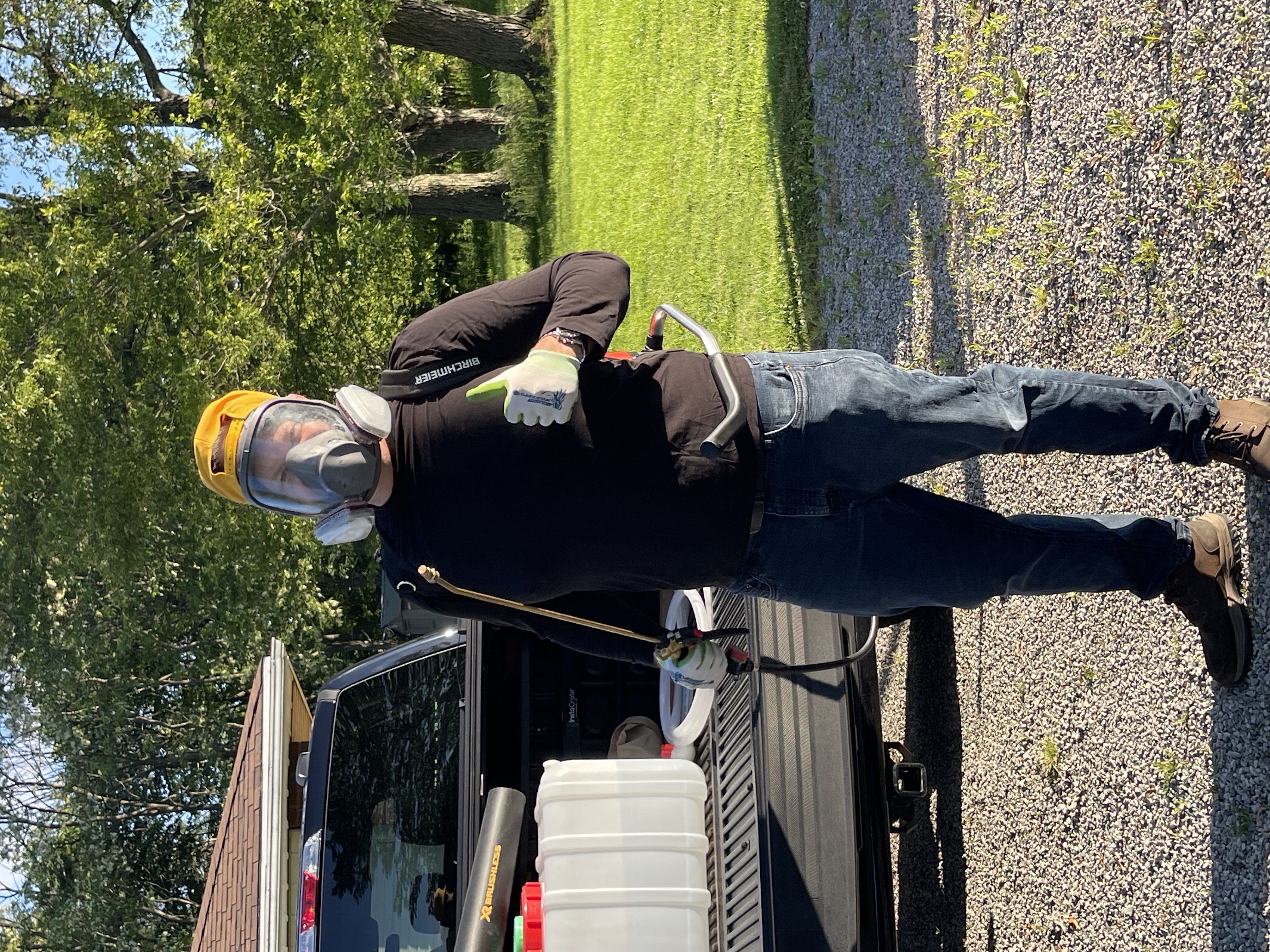
The treatment is a residual pyrethroid (typically bifenthrin or permethrin) applied to the wood edge, shrub line, ground cover, and other transition zones. We treat where the ticks are and avoid where they are not. The maintained lawn surface is not treated. Within hours of application, ticks contacting treated vegetation die. Residual lasts 4 to 8 weeks depending on weather, declining faster after heavy rain.
For Ontario residential properties, two annual treatments cover the bulk of the activity period: late April or early May (before nymphs become active in earnest), and late July or early August (catching the second activity peak). Properties with very high tick pressure (waterfront, wooded lots in established Lyme zones) often add a fall treatment in late September, which targets adults before they overwinter and lay eggs.
Yard treatment substantially reduces on-property tick density. It does not eliminate exposure during outdoor activity off-property (hiking, camping, walking dogs in wooded areas). For complete protection, the personal-protection layer is essential.
Ontario has had locally-acquired Lyme disease cases since the 1990s and the case count has risen as blacklegged tick range has expanded. Public Health Ontario publishes annual surveillance reports identifying which public health units have established blacklegged tick populations, which have ticks under surveillance, and which currently have no established population.
Most Lyme disease cases in Ontario, when identified and treated promptly, respond well to a course of doxycycline or amoxicillin. The challenge is identification: early Lyme often presents as a flu-like illness with or without an erythema migrans rash (the classic "bull's-eye"). Many cases lack the rash, and the flu-like symptoms are easy to attribute to other causes. If you have been bitten by a blacklegged tick or spent time in tick habitat and develop unexplained fever, fatigue, joint pain, or headache, mention the tick exposure to your physician.
Public Health Ontario, the Public Health Agency of Canada, and your local public health unit are the authoritative sources for Lyme disease guidance. We provide yard treatment as one part of an exposure-reduction strategy and are not in the business of medical advice.
How effective is yard treatment for ticks?
Studies of yard-perimeter pyrethroid treatments consistently show 50 to 90% reduction in nymphal tick density on treated properties for the duration of the residual. The variation depends on application quality, treatment timing relative to nymph emergence, and property characteristics (wooded edge, leaf litter depth). The treatment works best as part of a layered defence: yard treatment plus personal protection plus prompt tick checks.
When is the best time to treat for ticks?
Late April or early May in most of Southern Ontario. This timing catches the overwintering nymphs as they begin questing and hits them before peak activity in May and June, when most Lyme transmission to humans occurs. A second treatment in late July or early August handles the second activity peak. Hard frost in fall reduces tick activity; we generally do not treat after mid-October.
Does treatment make my yard "tick-free"?
It substantially reduces tick density on treated areas but does not produce a zero-tick yard. New ticks can be brought in by wildlife (mice, deer, birds) at any time. Treatment plus mowed lawn maintenance plus removal of leaf litter at the wood edge plus exclusion of deer where feasible is the integrated approach. Adding tick checks for family members and pets after outdoor activity completes the picture.
Are there ticks in my region?
Almost certainly. Public Health Ontario has documented established blacklegged tick populations across most of Southern Ontario, including all of Niagara, Hamilton, Halton, Toronto, Peel, York, Durham, Simcoe, Muskoka, and the eastern Ontario corridor. The density varies; areas closer to the Lake Ontario shoreline, the Niagara Escarpment, and along the Trent-Severn corridor consistently show the highest densities. Public Health Ontario publishes maps annually.
Can my dog get Lyme disease?
Yes. Dogs are commonly infected with Borrelia burgdorferi where blacklegged ticks are established. Most infections are asymptomatic but a fraction develop joint pain, fever, and (rarely) kidney complications. Veterinarians in Lyme-endemic areas of Ontario routinely include Lyme on the standard tick-borne disease panel and many recommend a Lyme vaccine for at-risk dogs. Topical or oral tick prevention products from your vet are the front line. Yard treatment reduces exposure but does not replace vet-prescribed prevention.
What do I do if I find a tick on me?
Remove it promptly with fine-tipped tweezers, gripping as close to the skin as possible and pulling straight up with steady pressure. Save the tick in a sealed bag in case identification is needed. Watch the bite area for 30 days for an expanding red rash and yourself for any flu-like symptoms. If a rash develops or symptoms appear, contact your physician and mention the tick exposure. The eTick.ca service offers free tick identification by submitting a photo.
Spider Squad - Ontario Pest Control
Same-week availability across Niagara, Hamilton, and Halton. Quotes returned within one business day.
Call 905-938-7498 Request a QuoteFind Your Region
Direct service in Niagara, Hamilton, and Halton. Licensed local operators across 14 more regions.
Premium Protection
Choose the protection barrier your property needs. Simple, professional, and guaranteed.
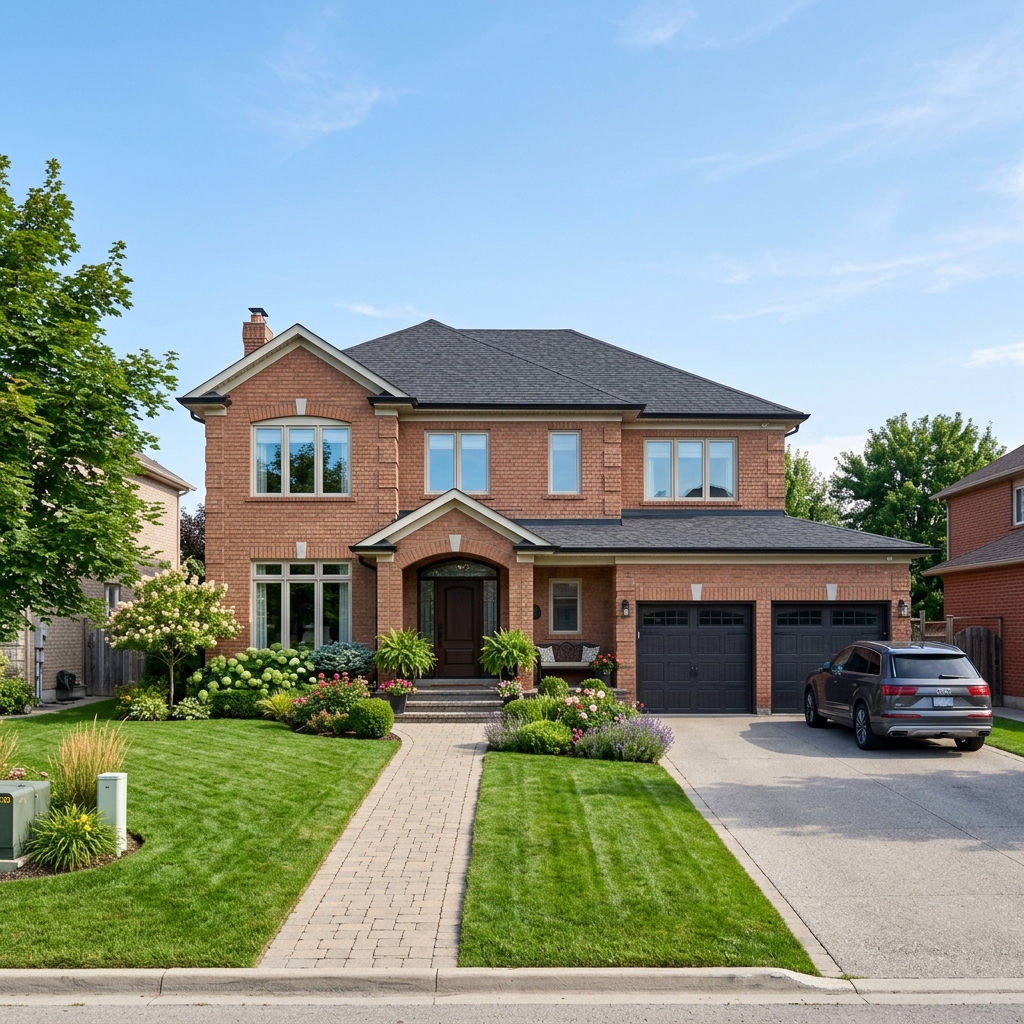
Our flagship exterior structural barrier targets the full perimeter of your home — foundations, soffits, window frames, eaves, and all entry points. Repels and eliminates spiders, ants, and crawling insects before they enter.

A comprehensive yard-level barrier applied to shaded vegetation, ornamental shrubs, deck skirting, and property borders. Reduces adult mosquito and tick populations around your outdoor living space.
SpiderShield™ perimeter barrier
SpiderShield™ creates an invisible exterior barrier that prevents more than just spiders — blocking ants, earwigs, crickets, and other seasonal crawlers from entering your home.
Wherever You Need Us
From the shores of Lake Erie to cottage-country docks — if bugs are a problem, we’re already on the way.
Genuinely Local Exterminators
Spider Squad is a family business — not a franchise, not a call centre. Our team lives in the communities we serve, which means faster scheduling, real accountability, and treatments designed for the pest pressures specific to this part of Ontario.
Don’t Wait
Same-week service available in most communities. Get a free assessment — no obligation.
Don’t Let Spiders Take Over

Tell us about your property and we’ll respond within hours to book your service. No obligation, no pressure.