Pillar Guide
Ants are social insects that live in colonies of dozens to millions. The few you see in the kitchen are foragers from a much larger colony located somewhere on or near the property. Effective control treats the colony, which means baiting, perimeter residuals, and patience.
The single most important thing to understand about ant control: the ant you see is not the problem. It is one worker out of a colony that may contain anywhere from a few hundred to several million individuals, plus one or more queens that produce new workers. Killing the worker on the kitchen counter does nothing to the colony. The next worker is already on the way.
Effective ant control either eliminates the queen, eliminates the workers faster than the queen can replace them, or makes the foraging environment unproductive enough that the colony abandons or relocates. Three tools work in this framework: bait, perimeter residual, and exclusion.
Bait carries a slow-acting toxicant back to the colony via worker trophallaxis (mouth-to-mouth food sharing) and is the only tool that reliably kills the queen. Perimeter residual kills foragers crossing treated surfaces and slows recruitment. Exclusion (sealing entry points, removing food and moisture sources) reduces the foraging incentive.
What does not work: spraying every ant you see with a contact insecticide. It kills the foragers, but it also kills the recruitment trail and breaks up the colony's communication, which often results in the colony budding into multiple smaller satellite colonies. The visible ant problem becomes worse, not better. The Ontario MECP Structural module discusses this explicitly in the IPM section.
Ontario hosts dozens of ant species. Three account for nearly all the structural pest calls we get.
The largest ants in Ontario, with workers up to 13mm. Black, sometimes with a reddish thorax. Carpenter ants do not eat wood (termites do) but they excavate galleries through softened, water-damaged, or already-decaying wood to build nests. The presence of carpenter ants inside a building is often a moisture indicator: somewhere on or in the structure, there is wood that is wetter than it should be. We have a dedicated carpenter ant page covering the species in detail.
Small (2 to 3mm), dark brown to black, the ants that show up in Ontario kitchens by the dozen. They nest under driveways, sidewalks, patio stones, and concrete slabs (hence the name). They forage indoors for sweets and grease. The classic "ants in the kitchen in spring" problem is almost always pavement ants. Detail on our pavement ant page.
Field ants (Formica), the ones that build the conspicuous mounds in lawns. Cornfield ants (Lasius americanus) and acrobat ants (Crematogaster) occasionally show up indoors. Pharaoh ants (Monomorium pharaonis) are an indoor tropical species that establishes in heated buildings, hospitals, and apartment complexes; they require specialist baiting and we refer those out to a structural specialist who handles indoor infestations.
For a typical Ontario residential ant problem (pavement ants in spring or summer, occasional carpenter ant sightings), our standard approach has four parts:
The treatment differs by species. Pavement ant colonies are reachable from outside by treating the colony entry under the slab. Carpenter ant colonies inside walls require a different approach. Misidentification leads to ineffective treatment, so an honest first step is identifying what you actually have.
Slow-acting baits (gel formulations or granular outdoor baits, depending on situation) are placed on active foraging trails. The workers carry the bait back and feed it to the queen and brood. Effective baiting requires patience: visible activity often increases briefly before it crashes, because the bait recruits more foragers before it kills them. We tell customers this in advance so they do not panic.
A residual pyrethroid treatment around the foundation, doorways, and known entry points kills foragers crossing the line and disrupts new recruitment. The residual is timed not to interfere with bait uptake when both are used.
Sealing entry points, fixing leaks, sealing food, and trimming vegetation away from the foundation reduces the long-term foraging incentive. This is the homeowner's part of the work, and we walk through it after treatment.
The most common pattern we see when a homeowner has been fighting an ant problem for months: a cycle of contact spray, brief relief, return, more spray, more return, escalating to either professional treatment or surrender. The reasons are diagnostic.
This is not a marketing pitch. It is the ant biology section of every pest management curriculum, including the Ontario MECP Structural module. The combination of bait plus residual applied with knowledge of which species you are treating is what makes the difference.
We treat:
We do not treat:
Why do I have ants in my kitchen?
Almost always one of three reasons: there is a food source they are foraging (often a small spill in the back of the cupboard), there is a moisture source attracting them (a leaking pipe, condensation under the dishwasher), or the weather changed and a colony nearby is moving its foraging activity indoors. Pavement ants in particular show up reliably in Ontario kitchens in May and June as soil temperatures rise and colony activity ramps up. The fix is identifying which colony, eliminating the indoor incentive, and applying bait plus perimeter residual to the colony source.
Will spraying ants make the problem worse?
Spraying with contact insecticides like the ones sold at Canadian Tire often disrupts the foraging trails and causes colony budding, where one colony splits into multiple smaller satellite colonies. The visible problem typically gets worse a week or two after spraying, not better. Professional treatment uses slow-acting baits that the foragers carry back to the queen, plus a residual at the entry points rather than a contact spray on the trail. The combination eliminates the colony rather than scattering it.
How long does ant treatment take to work?
Visible activity often increases for the first few days as bait recruits more foragers, then drops sharply between days 7 and 21 as the bait reaches the queen. Most colonies are gone within three weeks. Carpenter ant colonies in wall voids can take longer, four to six weeks, because the brood chambers are buffered from initial bait exposure. We do follow-up at two weeks and four weeks for harder colonies.
Are ant treatments safe for kids and pets?
Once the application has dried, treated surfaces are safe to contact. Bait stations are placed where foraging ants find them but pets do not (high cabinet voids, exterior soil applications). The pyrethroid residuals we use for the perimeter are the same chemistry used for spider treatment and have a long Health Canada registration history at residential use rates. If you have specific concerns about exposure to a child or pet, mention them when booking and we can use alternative formulations or placement.
Can carpenter ants damage my house?
Carpenter ants do not eat wood. They excavate galleries through wood that is already softened, typically by moisture damage. The structural risk is real but slower than termite damage, and carpenter ants are usually a symptom of a moisture problem rather than the cause of damage. Finding carpenter ants indoors typically means there is a leak, condensation, or chronic dampness somewhere in the building. The treatment is two-part: eliminate the colony, then identify and fix the moisture source so a new colony does not move in.
Do you treat ants in apartment buildings?
For multi-unit buildings, we recommend a structural pest management contractor with multi-unit experience because the treatment scope (interior wall voids, shared utility chases, multiple unit access scheduling) goes beyond our exterior-perimeter focus. We can treat exterior nest sites at multi-unit properties when the colony is reachable from outside. Our contractor network sometimes refers building-wide work to specialists.
Spider Squad - Ontario Pest Control
Same-week availability across Niagara, Hamilton, and Halton. Quotes returned within one business day.
Call 905-938-7498 Request a QuoteFind Your Region
Direct service in Niagara, Hamilton, and Halton. Licensed local operators across 14 more regions.
Premium Protection
Choose the protection barrier your property needs. Simple, professional, and guaranteed.
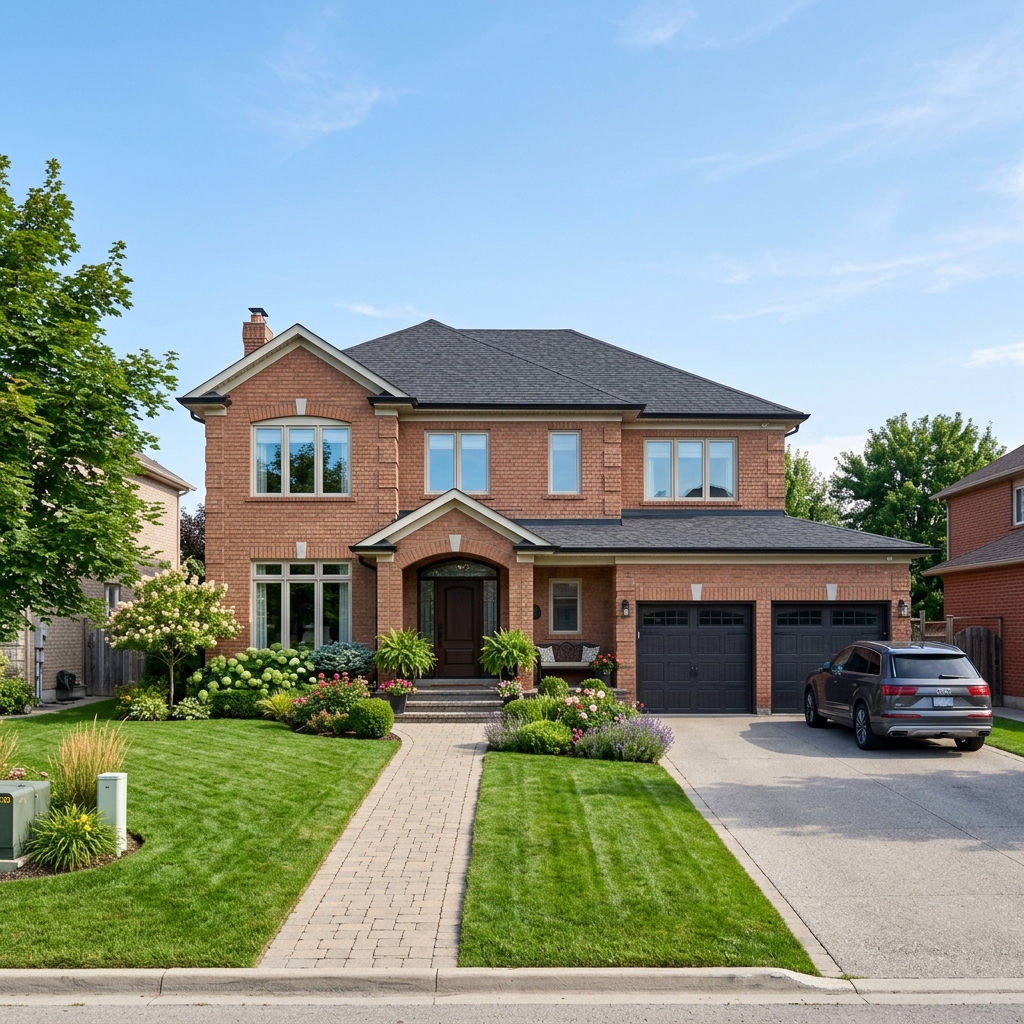
Our flagship exterior structural barrier targets the full perimeter of your home — foundations, soffits, window frames, eaves, and all entry points. Repels and eliminates spiders, ants, and crawling insects before they enter.

A comprehensive yard-level barrier applied to shaded vegetation, ornamental shrubs, deck skirting, and property borders. Reduces adult mosquito and tick populations around your outdoor living space.
SpiderShield™ perimeter barrier
SpiderShield™ creates an invisible exterior barrier that prevents more than just spiders — blocking ants, earwigs, crickets, and other seasonal crawlers from entering your home.
Wherever You Need Us
From the shores of Lake Erie to cottage-country docks — if bugs are a problem, we’re already on the way.
Genuinely Local Exterminators
Spider Squad is a family business — not a franchise, not a call centre. Our team lives in the communities we serve, which means faster scheduling, real accountability, and treatments designed for the pest pressures specific to this part of Ontario.
Don’t Wait
Same-week service available in most communities. Get a free assessment — no obligation.
Don’t Let Spiders Take Over

Tell us about your property and we’ll respond within hours to book your service. No obligation, no pressure.