Reference
Plain-English definitions of the terms exterminators use, written for homeowners. Where the term has a regulatory meaning under the Ontario Pesticides Act, we cite the Act. The full source documents are linked at the bottom of the page.
Active ingredient
The chemical in a pesticide product that does the actual killing or controlling of the pest. The label lists active ingredients separately from the inert carriers, solvents, and stabilizers that make up the rest of the product.
Adulticide
A pesticide that kills the adult stage of an insect, typically used for adult mosquitoes resting on yard vegetation.
Aggregation pheromone
A chemical signal one insect uses to attract others of its species. German cockroaches in heavy infestations produce a musty smell from aggregation pheromones.
Anticoagulant
A type of rodenticide that kills by interfering with blood clotting. Most modern rat and mouse baits are anticoagulants. They take several days to kill, which is why secondary poisoning of predators is a documented risk.
Arachnid
The animal class that includes spiders, mites, ticks, and scorpions. Distinct from insects: arachnids have eight legs and two body regions; insects have six legs and three.
Arthropod
A broad group of animals with jointed legs and exoskeletons. Includes insects, arachnids, crustaceans, and others. The Ontario Mosquito and Biting Flies licence covers control of biting arthropods, not just mosquitoes.
Bait
A pesticide formulation designed to be eaten by the target pest, usually mixed with food attractants. Slow-acting baits allow workers to carry the toxicant back to the colony before they die, which is why baits eliminate ant and cockroach colonies that sprays cannot.
Bifenthrin
A synthetic pyrethroid insecticide commonly used for residual exterior pest control. The Health Canada PMRA registers bifenthrin products for spider, ant, mosquito, and tick use under specific labels. It works by disrupting insect nervous systems.
Buffer zone
An untreated area maintained between a pesticide application and a sensitive feature like a water body, food garden, or play area. Pesticide labels specify minimum buffer zones for different application types.
Carbamate
A class of insecticides that work by inhibiting acetylcholinesterase, an enzyme in the nervous system. Less common in modern residential pest control than pyrethroids, but still used for specific applications.
Carrier
The inert material that dilutes a pesticide concentrate to its application rate. Often water, sometimes oil or clay depending on formulation.
Cockroach
An order of insects (Blattodea). The German cockroach (Blattella germanica) is the most common indoor pest cockroach in Ontario.
Crack and crevice treatment
An application method where pesticide is placed in narrow gaps where pests hide, like cracks behind baseboards or in cabinet voids. Targeted, low-volume, and effective for indoor pest control.
Deltamethrin
A synthetic pyrethroid insecticide used in residential pest control formulations. Works similarly to bifenthrin but with slightly different label uses and physical properties.
DEET
N,N-diethyl-meta-toluamide. The active ingredient in most personal insect repellents. Health Canada PMRA registers DEET products at concentrations up to 30% for adult use, with lower concentrations for children. Effective against mosquitoes, ticks, and biting flies.
Dormant spray
An exterior pesticide application made during the dormant season (early spring or late fall) when target pests are still inactive. Used in some pest management programs to suppress overwintering populations before they become active.
Drift
The unintended movement of pesticide spray off the target site, usually carried by wind. Drift control is a regulatory and operational priority; the Ontario MECP module dedicates a section to it.
Egg case (ootheca)
The protective capsule that contains insect eggs in some species, including cockroaches. German cockroach females carry the egg case until just before hatching, which is one reason they spread quickly.
Entomologist
A scientist who studies insects. For complex pest identification, exterminators consult entomologists at universities, government labs, or private labs.
Exclusion
Sealing a building against pest entry. The first-line approach for rodent control and a supporting practice for ant and cockroach control. Exclusion alone is the only durable solution to mouse and rat infestations.
Exoskeleton
The hard outer skeleton of insects and arachnids. Pests must shed it (molt) periodically to grow. Some pesticide formulations target the molting process specifically.
Field operator
A licensed exterminator who performs the on-site application work. Spider Squad coordinates field operators across Southern Ontario, all holding Ontario MECP exterminator licences.
Foraging trail
The chemical pheromone path ants use to communicate the route from the colony to a food source. Disrupting a foraging trail with contact spray often causes colony budding and makes the visible problem worse.
Frass
Insect excrement and gnaw debris. Carpenter ant frass is a sawdust-like mix of pushed-out wood fragments and ant body parts. Termite frass is different in appearance.
Fumigation
A pest control method using gas to kill pests in an enclosed space. Fumigation requires specialized equipment and a separate licence in Ontario; Spider Squad does not perform fumigation.
Habitat
The environment a pest lives in. Knowing habitat (a spider's web location, a tick's leaf-litter zone, a mouse's burrow) determines where treatment is applied.
Hot spot
A localized area of high pest activity within a larger property. Inspection identifies hot spots so treatment can be targeted.
IPM (Integrated Pest Management)
A pest management framework that combines monitoring, identification, prevention, mechanical and cultural controls, and chemical controls used only as needed. The Ontario MECP curriculum is built around IPM. Effective pest control follows IPM principles, not spray-everything-that-moves.
Insecticide
A pesticide specifically targeting insects. Different insecticides have different modes of action; the Insecticide Resistance Action Committee (IRAC) groups them numerically by site of action to help avoid resistance.
Insect Growth Regulator (IGR)
A chemical that interferes with insect development rather than killing adults directly. IGRs prevent immature stages from maturing or reproducing. Used in cockroach and flea programs alongside conventional insecticides.
Label
The federally-approved instructions for a pesticide product. Labels specify what pests the product can be used against, what application rates are allowed, what protective equipment is required, and what restrictions apply. Label compliance is a federal legal requirement under the Pest Control Products Act and a provincial requirement under the Pesticides Act.
Larvicide
A pesticide that kills the larval (immature) stage of an insect. Bti (Bacillus thuringiensis subsp. israelensis) is the most common biological larvicide for mosquito and black fly larvae. Larvicide application to water bodies is regulated as a water extermination in Ontario.
Lyme disease
A bacterial infection caused by Borrelia burgdorferi, transmitted to humans by infected blacklegged ticks. The only known Lyme vector in Ontario is the blacklegged tick (Ixodes scapularis). Public Health Ontario tracks blacklegged tick range and Lyme case counts annually.
MECP (Ministry of the Environment, Conservation and Parks)
The Ontario provincial ministry that regulates pesticide use, exterminator licensing, and environmental protection. Spider Squad operators hold MECP exterminator licences in three categories: Structural, Landscape, and Mosquito and Biting Flies.
Monitoring
Tracking pest activity over time using sticky traps, pheromone traps, visual inspection, or other tools. Monitoring data informs whether treatment is needed, how to time it, and whether it worked.
Nymph
An immature insect or arachnid that resembles the adult but is smaller and not yet sexually mature. Blacklegged tick nymphs are the size of a poppy seed and responsible for most Lyme transmission to humans.
Perimeter treatment
An exterior pesticide application around the foundation of a building. The standard approach for residential spider, ant, and tick control. Targets pests where they live and forage rather than indoors.
Pesticide
Any chemical used to kill, repel, or control pests. Includes insecticides (insects), rodenticides (rodents), herbicides (plants), fungicides (fungi), avicides (birds), and others. In Ontario, pesticide use is regulated under the Pesticides Act and Ontario Regulation 63/09.
Pheromone
A chemical signal that organisms of the same species use to communicate. Pheromone traps exploit this for monitoring (sex pheromones to attract males) and for foraging-trail disruption (synthetic versions of trail pheromones).
PMRA (Pest Management Regulatory Agency)
The Health Canada agency that registers pesticides for sale and use in Canada. Every pesticide product sold in Canada must be PMRA-registered, and the registration specifies what uses are permitted. Re-evaluation occurs periodically.
Pyrethroid
A class of synthetic insecticides modelled on pyrethrin (the natural insecticide from chrysanthemums). The dominant chemistry for residential pest control. Includes bifenthrin, deltamethrin, permethrin, cypermethrin, and others. IRAC Group 3, sodium channel modulators.
Quote turnaround
The time from request to delivery of a price quote. Spider Squad's standard is one business day.
Recruitment
The process by which a foraging insect that finds food signals others to follow. Ants recruit aggressively along pheromone trails. Disrupting recruitment is a goal of effective ant control.
Residual
The lasting activity of a pesticide on treated surfaces after application. A 60-day residual means the product continues to kill pests that contact treated surfaces for roughly two months. Residual depends on chemistry, weather, and surface type.
Resistance
The genetic ability of a pest population to survive a pesticide that previously killed them. Resistance develops over time when the same chemistry is used repeatedly. Rotating active ingredients with different modes of action slows resistance development. The IRAC group numbers help guide rotation.
Rodenticide
A pesticide formulated to kill rodents. Most modern rodenticides are anticoagulants. Best practice limits rodenticide use to tamper-resistant bait stations after exclusion and trapping have been implemented.
Sanitation
Cleaning practices that reduce pest food, water, and harbourage. Often the single most effective non-chemical control measure for cockroaches, ants, and rodents.
Source reduction
Eliminating the breeding or harbourage site rather than killing the pests. For mosquitoes, source reduction means eliminating standing water. For carpenter ants, it means fixing the moisture damage that allowed the colony to establish.
Structural exterminator
An Ontario exterminator licence category authorizing pesticide use for control of pests in, on, or around buildings, structures, machines, and vehicles. Spider Squad operators hold this licence (Ontario L-206-1338546069).
Threshold
The pest population density at which control action is justified. Below threshold, monitoring is sufficient; above threshold, treatment is appropriate. Threshold values vary by pest, situation, and customer tolerance. The IPM framework explicitly incorporates threshold-based decisions.
Trap
A device for capturing or killing pests without using a residual pesticide. Snap traps, sticky traps, pheromone traps, and live traps each have specific use cases. Often used alongside chemical control as part of an IPM program.
Vector
An organism that transmits a disease-causing pathogen from one host to another. The blacklegged tick is the only known Lyme disease vector in Ontario. Mosquitoes can vector West Nile virus.
Water extermination
An Ontario regulatory category for pesticide application to water (typically larvicide application to standing water for mosquito control). Requires specific authorizations under the Pesticides Act and Ontario Regulation 63/09.
West Nile virus
A mosquito-borne virus established in Ontario since 2002. Most human infections are asymptomatic; a small fraction develop serious neurological illness. Public Health Ontario monitors mosquito populations and publishes weekly West Nile activity reports during the season.
Spider Squad - Ontario Pest Control
Same-week availability across Niagara, Hamilton, and Halton. Quotes returned within one business day.
Call 905-938-7498 Request a QuotePremium Protection
Choose the protection barrier your property needs. Simple, professional, and guaranteed.
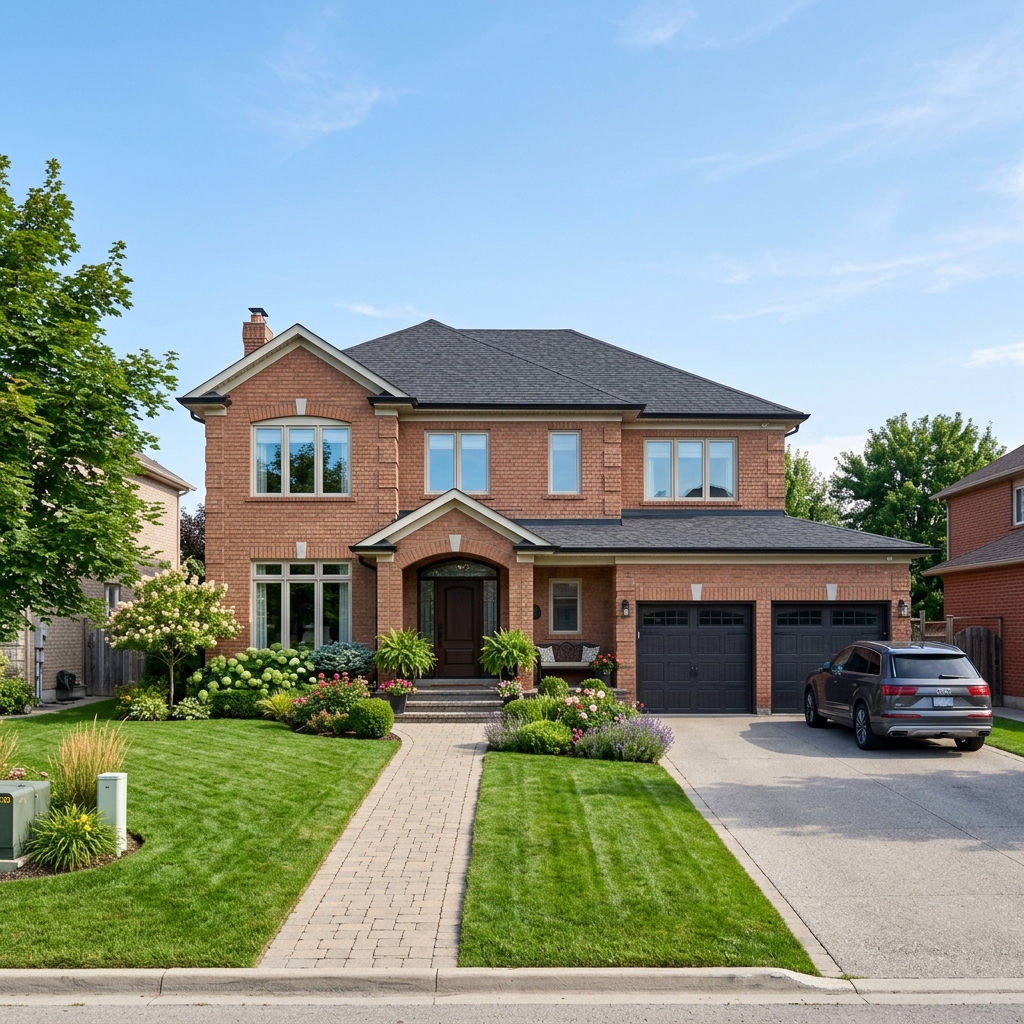
Our flagship exterior structural barrier targets the full perimeter of your home — foundations, soffits, window frames, eaves, and all entry points. Repels and eliminates spiders, ants, and crawling insects before they enter.

A comprehensive yard-level barrier applied to shaded vegetation, ornamental shrubs, deck skirting, and property borders. Reduces adult mosquito and tick populations around your outdoor living space.
SpiderShield™ perimeter barrier
SpiderShield™ creates an invisible exterior barrier that prevents more than just spiders — blocking ants, earwigs, crickets, and other seasonal crawlers from entering your home.
Wherever You Need Us
From the shores of Lake Erie to cottage-country docks — if bugs are a problem, we’re already on the way.
Genuinely Local Exterminators
Spider Squad is a family business — not a franchise, not a call centre. Our team lives in the communities we serve, which means faster scheduling, real accountability, and treatments designed for the pest pressures specific to this part of Ontario.
Don’t Wait
Same-week service available in most communities. Get a free assessment — no obligation.
Don’t Let Spiders Take Over

Tell us about your property and we’ll respond within hours to book your service. No obligation, no pressure.