Pillar Guide
Spiders are arachnids, not insects. They have two body regions, eight legs, and no antennae. Almost every spider you see in Ontario is harmless to humans, and almost every spider problem on a home is an exterior issue solved by an exterior treatment. Here is what we have learned from treating thousands of homes across Southern Ontario.
Spiders belong to the class Arachnida, the same group as mites, ticks, and scorpions. Insects belong to a different class entirely. The practical distinction matters because most "kills bugs" products are formulated for insects and have weaker activity against arachnids. Effective spider control uses pesticides specifically labelled for spider use at appropriate concentrations.
Adult spiders have two body regions (the cephalothorax and the abdomen), four pairs of legs (eight total), one or two pairs of simple eyes, and a pair of pedipalps near the mouth used for sensing and, in males, mating. They do not have antennae and do not have wings. They breathe through book lungs, structures unique to arachnids that look like pages of a book inside the abdomen.
Every Ontario spider produces silk and venom. The venom is for subduing prey, not defending against humans, and only one Ontario species (the northern black widow, Latrodectus variolus) produces venom that warrants medical attention. Most spiders cannot bite through human skin even if they tried, and most have no interest in trying.
Spiders do not invade homes the way ants or rodents do. They are predators, and they go where the food is. The "food" on the outside of an Ontario home is small flying insects attracted by exterior lighting and warmth radiating from the building envelope. Where there are flies, midges, moths, and mosquitoes, there are spiders eating them.
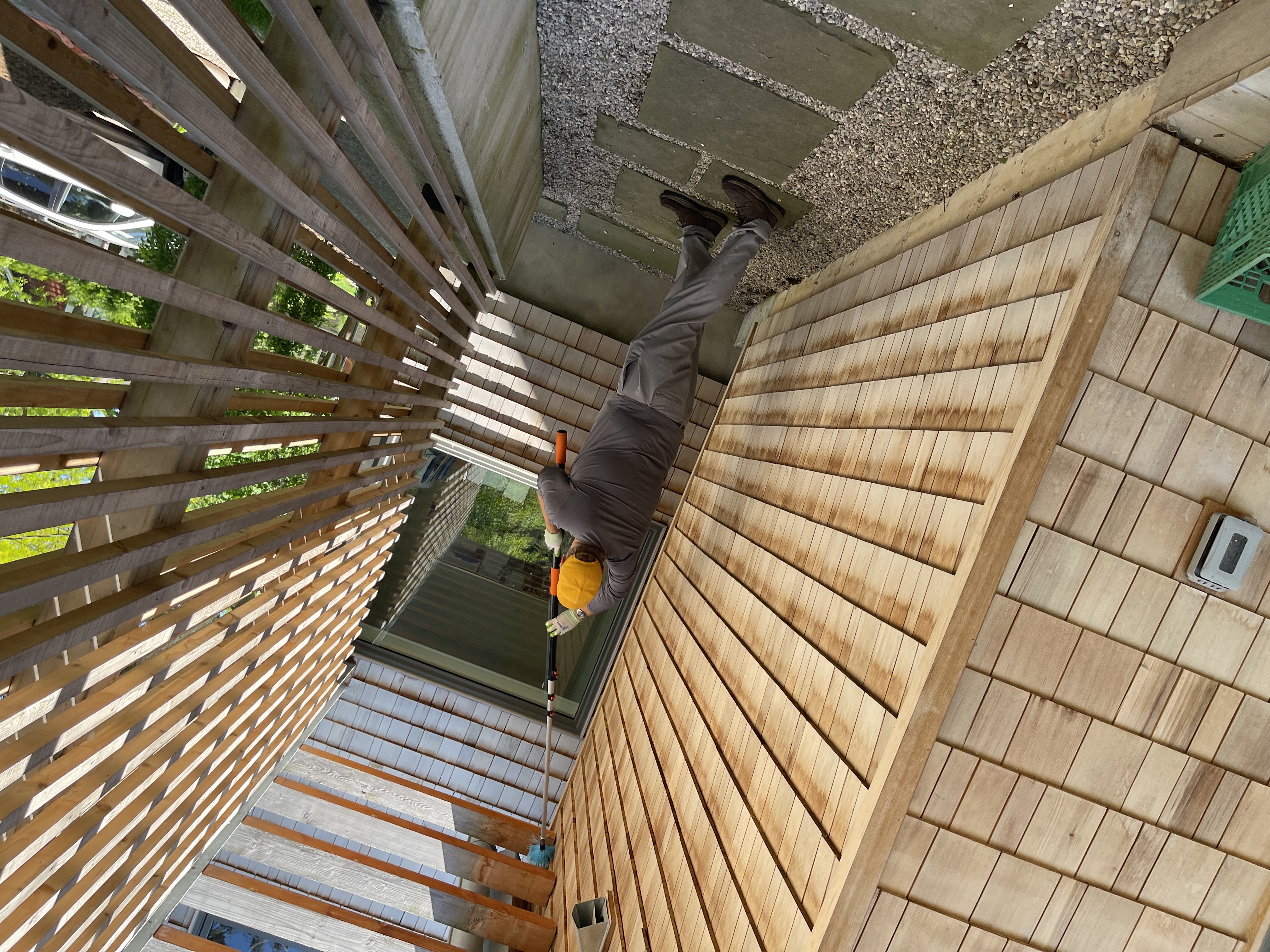
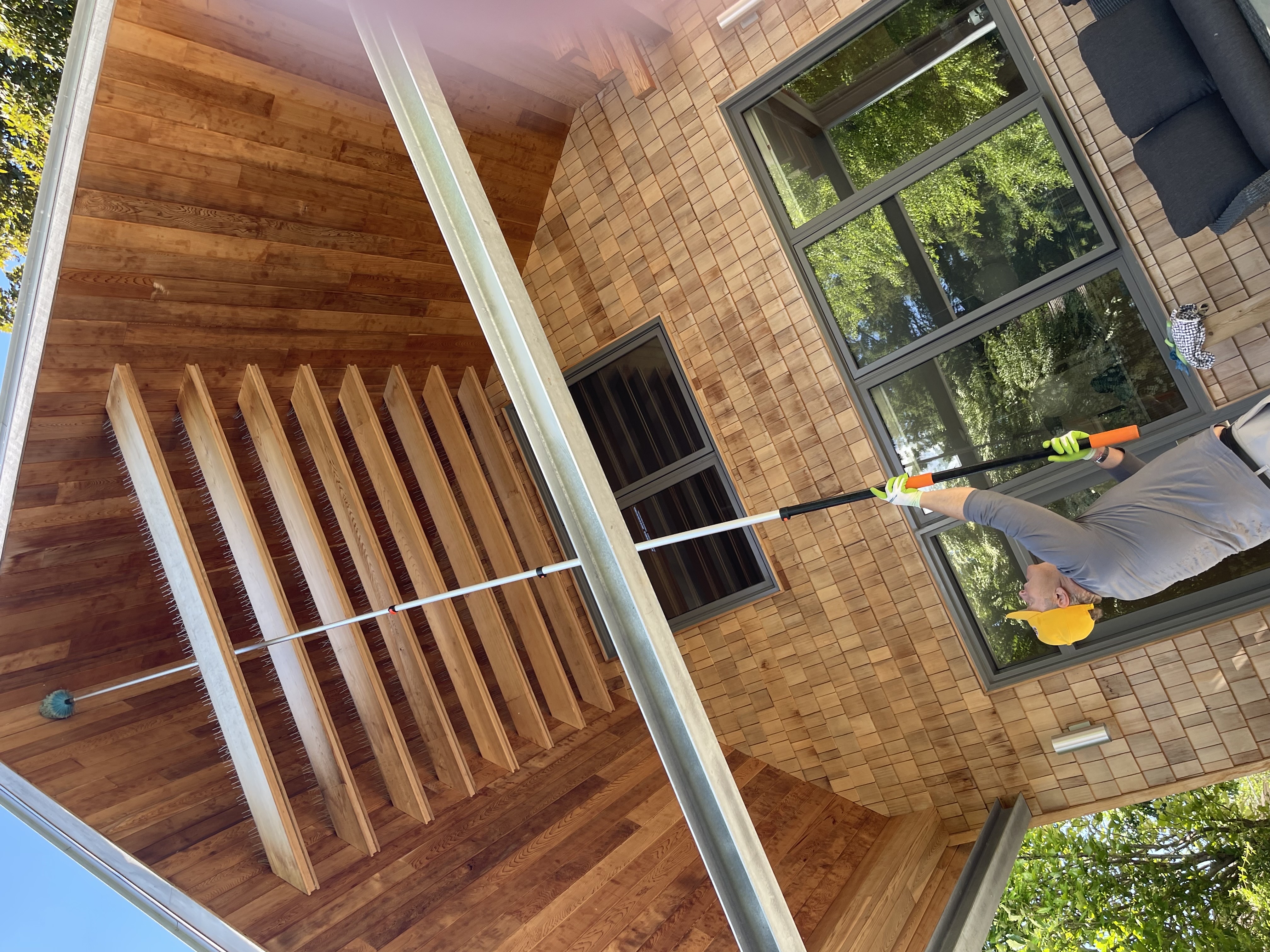
This is why exterior light fixtures, soffit corners, window frames, eaves, garage doors, and dock structures consistently host the most webs. Light attracts the prey, the prey attracts the spider. The spider builds a web (orb weavers, cellar spiders, common house spiders) or hunts on foot (wolf spiders, jumping spiders, yellow sac spiders) at the source.
The implication for treatment is direct: kill the food source, and you starve the spiders out. Treating the perimeter of a building with a residual insecticide both knocks down spiders that contact treated surfaces and reduces the insect population they hunt. The result is fewer webs and fewer spiders for the duration of the residual.
Indoor spiders in Ontario are usually one of two situations. Cellar spiders (Pholcidae) establish in basements and corners year-round on a population of incidental indoor flying insects. Funnel weavers and house spiders move inside in the fall as temperatures drop, sheltering against the cold. In both cases the long-term solution is exterior, not interior. Treating the building envelope reduces the inbound flow. Vacuuming and removing webs handles what is already inside.
Spider Squad does not perform routine interior fogging or interior pesticide application for spiders. Both are unnecessary and run counter to the integrated pest management principles in the Ontario MECP Structural module. We do offer a one-time interior crack-and-crevice spot treatment when there is an active interior issue.
The eleven species below cover roughly 95% of the spiders we identify on Ontario homes. The species pages have full identification details, photos, and biology.
The Ontario MECP curriculum teaches a multi-step framework called integrated pest management (IPM). It applies to every licensed exterminator in the province and underpins how we work. The five steps in our context:
What IPM is not: spraying everything that moves. The MECP Structural module is explicit that pesticides are one tool among several, and that prevention plus mechanical and cultural controls should always come first. We follow that.
Our standard spider perimeter treatment uses a Health Canada PMRA-registered residual product containing bifenthrin or deltamethrin (we choose based on label-approved use site, season, and customer preference). Both belong to the synthetic pyrethroid family (Insecticide Resistance Action Committee Group 3, sodium channel modulators). The Ontario MECP Structural module discusses both extensively in Section 4 (Pesticide Basics) and Appendix F (Insecticide Groups Based on Sites of Action).
Why pyrethroids: they have residual activity on building surfaces (effective for weeks to months), low mammalian toxicity at use rates, and a regulatory record going back decades. They are the dominant chemistry for residential structural pest control across North America.
What this means for your family: surfaces are safe to contact once dry, typically 30 to 60 minutes after application. We treat exterior surfaces only and do not apply during active rain. Pet bowls, garden harvests, and play areas are kept clear of treated surfaces during the dry-down window.
Spider activity in Ontario follows a predictable annual rhythm. Understanding it helps you time treatment.
Spiderlings emerge from egg sacs laid the previous fall. Population starts low. This is when first-of-season treatment is most cost-effective: knocking down the founding population reduces the breeding base for the rest of the year.
Population builds. Web-building species become more visible. Mating activity peaks for many species. Most homeowners notice "a spider problem" starts here.
Peak spider season. Mature females are large, conspicuous, and laying eggs. Many species enter homes seeking shelter against cold nights. This is the busiest season for spider service requests.
Most outdoor species die back; surviving eggs and dormant adults wait in protected locations. Indoor populations of cellar spiders and house spiders persist year-round at lower density. We do not apply outdoor pesticides below 5C since residual activity drops sharply.
Honest scope, before you book:
Do spider treatments actually work?
Yes, when done correctly. A correctly performed exterior perimeter treatment using a Health Canada PMRA-registered pyrethroid residual product reduces visible spider population on a typical home by 80 to 95% for the duration of the residual (60 to 90 days). The treatment is most effective when paired with web removal at the time of treatment and seasonal re-application. Where it falls short is when applied incorrectly, applied to the wrong species, applied at the wrong time of year (cold weather kills residual), or paired with a property that has untreated structural issues like missing screens or large gaps in soffits.
Are spider treatments safe for kids and pets?
Once the application has dried (typically 30 to 60 minutes), treated surfaces are safe to contact for kids and pets. The pyrethroid family of pesticides we use has been registered for residential use by Health Canada PMRA for decades and undergoes routine re-evaluation. We treat exterior surfaces only, do not apply over food gardens or pet feeding areas, and keep treated areas clear during the wet window. If you have specific medical concerns, mention them at the time of quote and we can adjust the application or schedule.
How often should I re-treat?
For most Ontario homes, two treatments per year cover the bulk of the spider season: an early-spring treatment in April or May to knock down the founding population before it breeds, and a late-summer treatment in August or early September to control the peak fall season. Homes with heavier exposure (waterfront, wooded lots, large amounts of exterior lighting) often benefit from a third treatment. Our annual maintenance plan handles scheduling automatically.
What is the difference between a structural exterminator and a landscape exterminator?
These are two distinct licence categories under the Ontario Pesticides Act. A Structural exterminator is licensed to treat in, on, and around buildings - what we do for spiders, ants, and structural pests. A Landscape exterminator is licensed to treat lawns, ornamental plants, and tree pests. We hold both licences (Structural L-206-1338546069 and Landscape L-212-4268842130) plus a Mosquito and Biting Flies licence (L-215-7338555928), which allows us to handle yard mosquito and tick treatments alongside structural spider work.
Can I do this myself with a hardware store product?
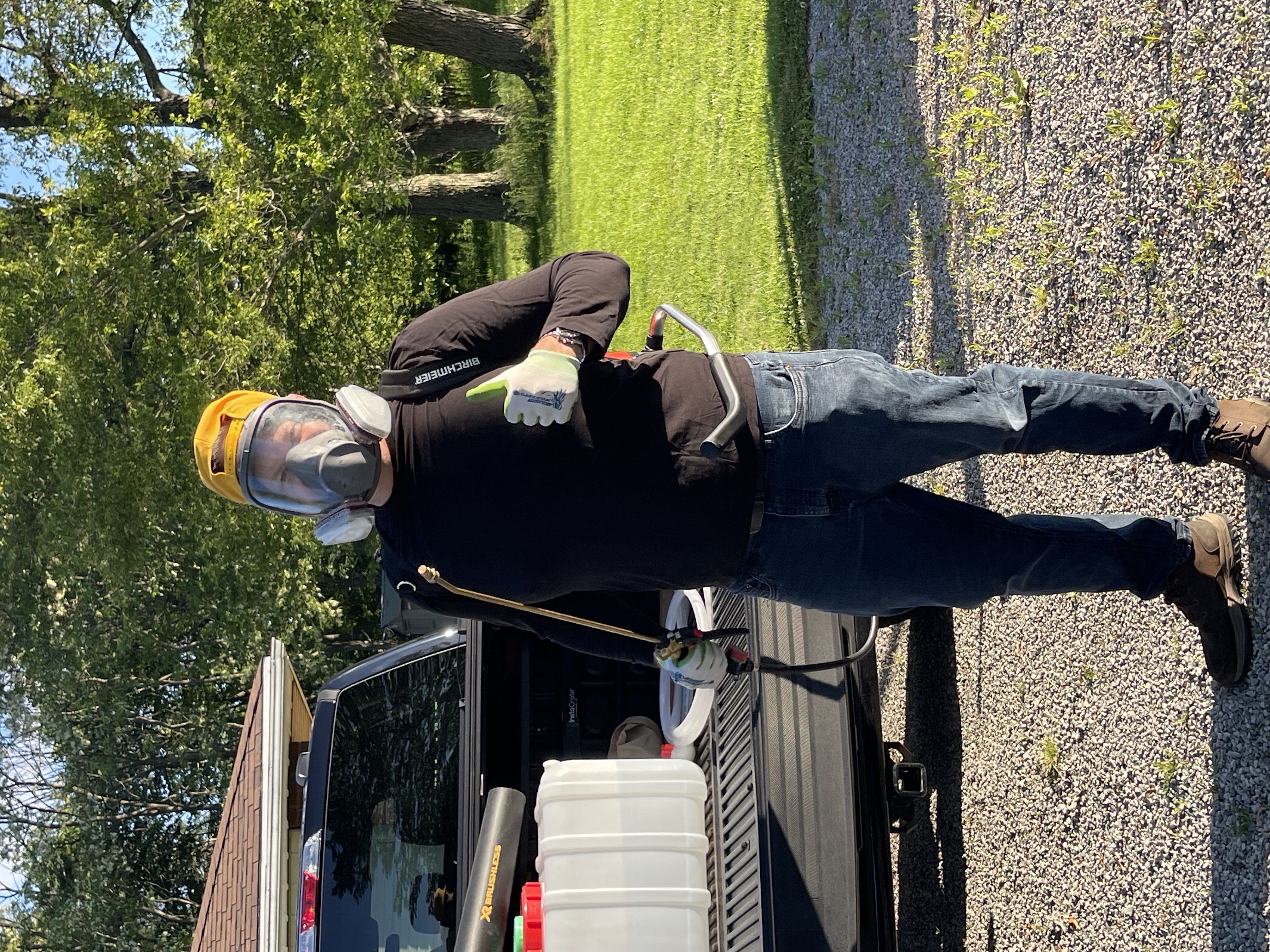
You can buy lower-concentration consumer pesticides at Canadian Tire and similar retailers. They work, but they are formulated for occasional spot use and have shorter residual than the commercial-grade products available only to licensed exterminators. The bigger gap is application: a backpack sprayer with the right nozzle, applied at the right rate, hitting the right surfaces (eaves, soffit corners, weep holes, window frames, garage door tracks) is what produces the result. Our DIY vs Professional page goes through the math.
Do you guarantee the work?
Yes. If the spider population returns within two weeks of a standard treatment, we re-treat at no additional charge. The two-week window catches the realistic post-treatment rebound period. Beyond that, the residual is doing its job and seasonal re-treatment is the right approach.
Spider Squad - Ontario Pest Control
Same-week availability across Niagara, Hamilton, and Halton. Quotes returned within one business day.
Call 905-938-7498 Request a QuoteFind Your Region
Direct service in Niagara, Hamilton, and Halton. Licensed local operators across 14 more regions.
Premium Protection
Choose the protection barrier your property needs. Simple, professional, and guaranteed.
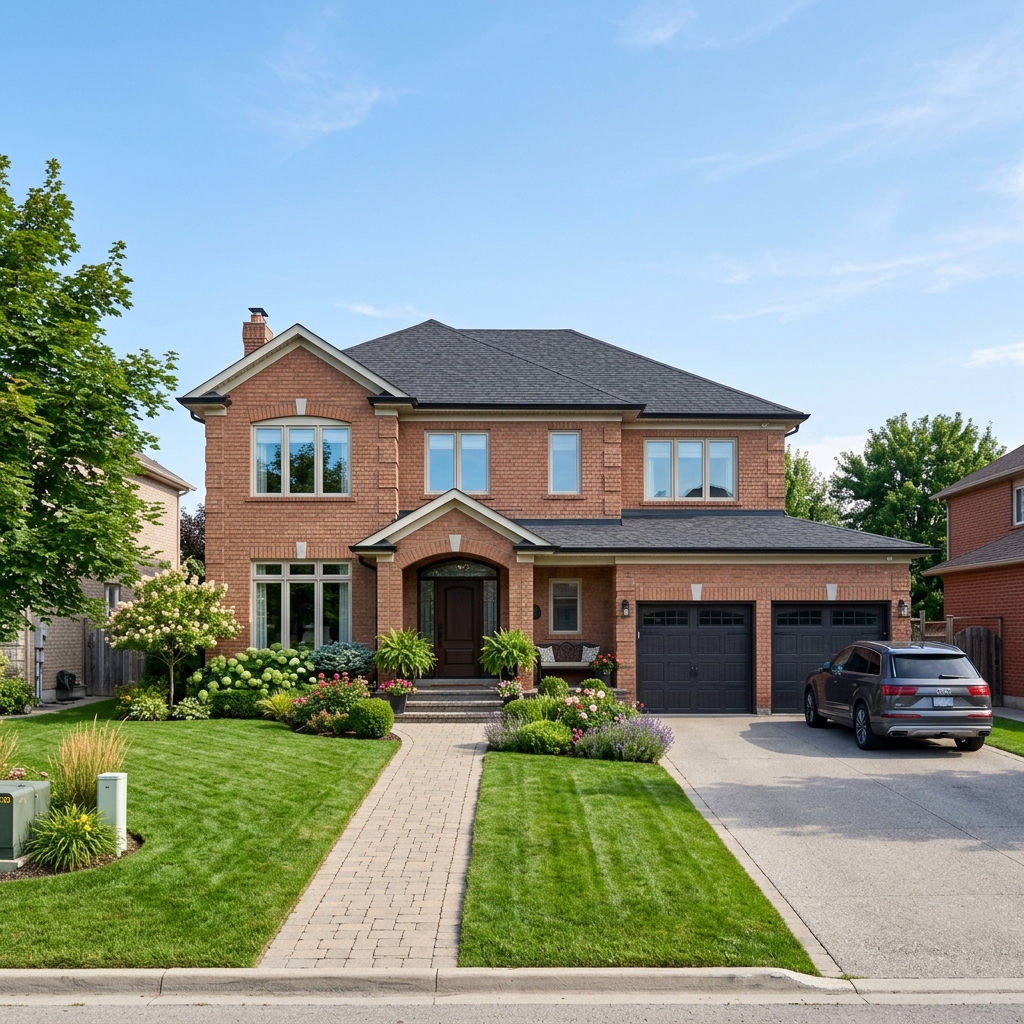
Our flagship exterior structural barrier targets the full perimeter of your home — foundations, soffits, window frames, eaves, and all entry points. Repels and eliminates spiders, ants, and crawling insects before they enter.

A comprehensive yard-level barrier applied to shaded vegetation, ornamental shrubs, deck skirting, and property borders. Reduces adult mosquito and tick populations around your outdoor living space.
SpiderShield™ perimeter barrier
SpiderShield™ creates an invisible exterior barrier that prevents more than just spiders — blocking ants, earwigs, crickets, and other seasonal crawlers from entering your home.
Wherever You Need Us
From the shores of Lake Erie to cottage-country docks — if bugs are a problem, we’re already on the way.
Genuinely Local Exterminators
Spider Squad is a family business — not a franchise, not a call centre. Our team lives in the communities we serve, which means faster scheduling, real accountability, and treatments designed for the pest pressures specific to this part of Ontario.
Don’t Wait
Same-week service available in most communities. Get a free assessment — no obligation.
Don’t Let Spiders Take Over

Tell us about your property and we’ll respond within hours to book your service. No obligation, no pressure.